Building Regulations
Removing a chimney breast is controlled structural work. Building Control is notified, inspects, and issues the completion certificate you will need when you sell.
01 BRIGHTON, HOVE & EAST SUSSEX
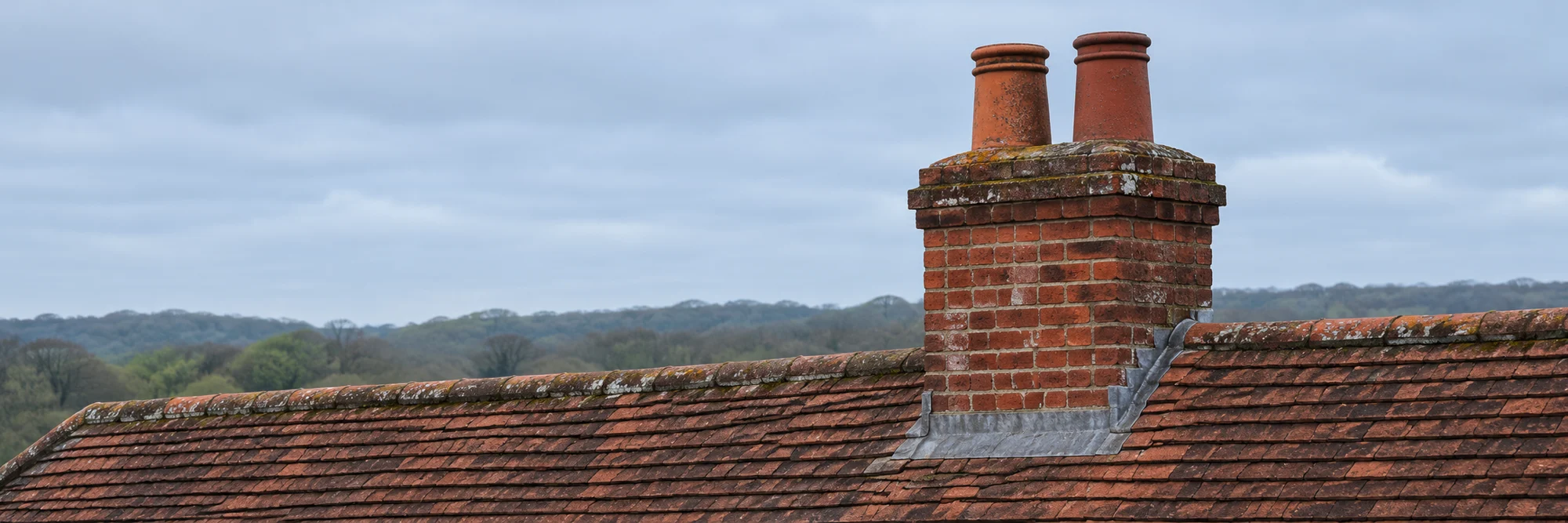
Unused, leaning or leaking chimney stacks taken down and the roof made good, from Hove and Brighton along the coast to Seaford and inland to Lewes. Chimney breasts removed with proper support and Building Control sign-off. Repointing, lead flashing and leak repairs for the chimneys worth keeping.
02 START WITH THE PROBLEM
Four situations cover almost every enquiry we get from Brighton, Hove and East Sussex. Pick the one that sounds like yours.
No fire below, but mortar, pots and flashing still need paying for. Taking it down ends the upkeep.
Stack removalIt takes floor and wall space out of every room it passes through. Removing it is structural work, done with sign-off.
Breast removalStains on the breast or ceiling have five or six possible causes. The fix depends on finding the right one.
Trace a leakA decision guide, symptom by symptom, with what each route costs now and over the next twenty years.
Help me decide03 BEFORE AND AFTER
What removal changes, outside and in.
Drag the divider to compare.
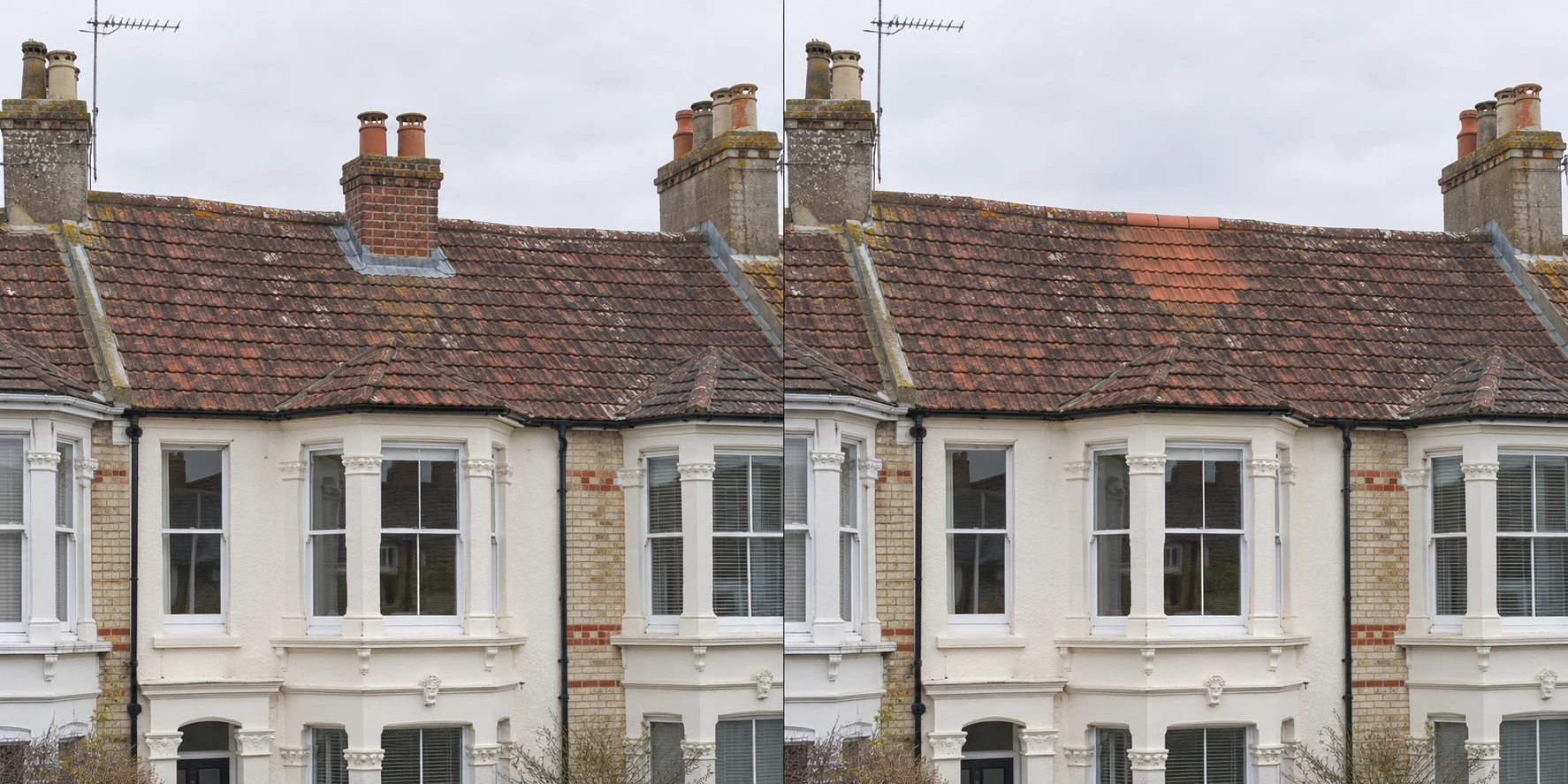
An unused stack removed, with matching slates making good the roof.
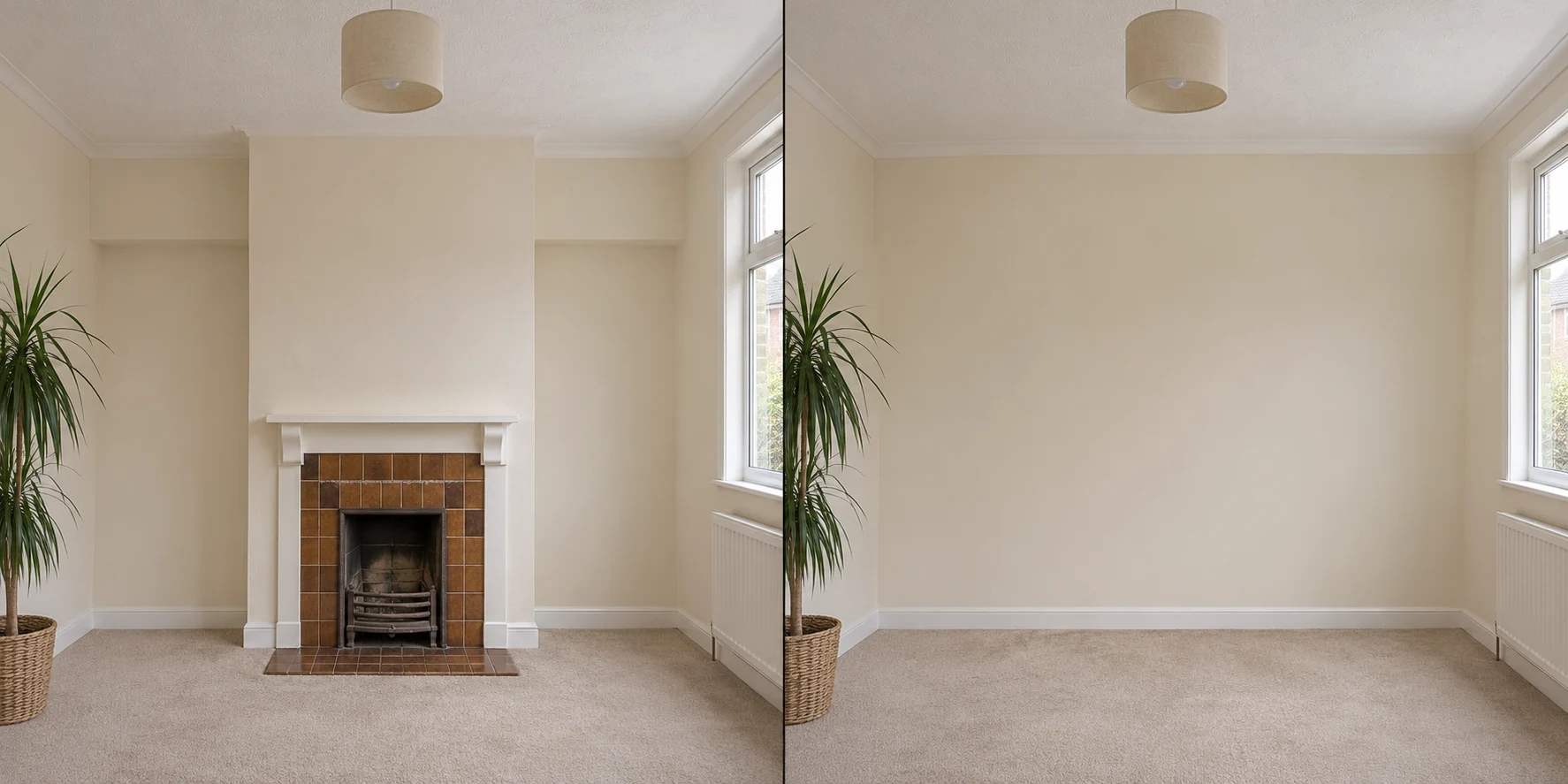
From a projecting breast to a flat wall and more usable floor.
04 SERVICES
Removal where the chimney has had its day, repair where it is worth keeping.
Above the roof
An unused or failing stack taken down to below the roofline, the roof made good in matching slate or tile, and the flues below capped and vented.
Read more02Inside your home
Floor space back in one room or on every floor, with whatever stays above properly supported and signed off by Building Control.
Read more03Find the fault
Cracked pots, failed flaunching, spalled brick and leaning stacks: what each symptom means and what fixing it involves.
Read more04Mortar & brickwork
Worn joints raked out and repointed in a mortar that suits the brick, before wind-driven rain off the Channel gets into the stack.
Read more05Where roof meets chimney
Aprons, step flashing, soakers and back gutters repaired or renewed. The junction behind most chimney leaks.
Read more06Damp patches & water
Damp on the chimney breast or ceiling traced to its real cause, whether rain, a failed flashing or condensation in a sealed flue.
Read more05 GUIDE PRICES
Typical 2026 guide prices, including scaffolding where the job needs it. Brighton, Hove and the rest of East Sussex usually sit in the upper half of each range. Your own figure depends on height, access, whether the stack is shared and what the roof is covered in.
| Job | Guide price |
|---|---|
| Stack removal, bungalowPeacehaven, Saltdean and Seaford bungalows | £1,200 – £2,000 |
| Stack removal, two-storey houseMost terraces and 1930s semis | £1,800 – £3,500 |
| Stack removal, tall terrace or shared stackThree-storey Brighton and Hove terraces | £3,000 – £6,000 |
| Chimney breast, ground floor onlyWith support for what stays above | £1,500 – £3,000 |
| Full chimney, stack and all breastsRoof to ground floor | £4,500 – £6,500+ |
| Chimney repointingOften with new flaunching | £450 – £1,200 |
Guide ranges from published cost guides, not quotes. VAT, engineer and council fees may be extra.
DONE PROPERLY
A chimney holds up more than it looks like it does. This is what a proper removal covers, whoever you ask to do it.
Removing a chimney breast is controlled structural work. Building Control is notified, inspects, and issues the completion certificate you will need when you sell.
Anything left above a removed breast is carried on a steel beam or other approved support, to a structural engineer's calculations.
Most terraces and semis in Brighton, Hove and Lewes share the chimney wall. Your neighbour is given notice under the Party Wall Act before work starts.
Flues left behind are capped and ventilated top and bottom, so a sealed chimney does not turn into a damp patch.
06 HOW IT WORKS
Four steps, and a written scope before anything is booked.
Pick the job, answer a few questions about the house and add your postcode. It takes about a minute.
The stack from outside, each room involved and the loft if you can reach it. Most guide prices come from these.
Access, structure, neighbours and permissions are checked, and the quote lists scaffold, work, waste and making good.
Rooms sheeted, chimney taken down by hand, roof and walls made good, and Building Control inspection where it applies.
07 AREAS WE COVER
Chimneys change from one town to the next, and so do the councils. Each local guide covers the houses, the permissions and the costs for that area.
Tall Regency and Victorian terraces, shared ridge stacks, bungaroosh walls and 34 conservation areas.
Lewes district · BN7 – BN8A historic county town inside the South Downs National Park, where listing and access shape every job.
Lewes district coast · BN10Clifftop bungalows with low stacks that take the full force of salt wind off the Channel.
Lewes district coast · BN9Port-town terraces on steep streets, with shared stacks and exposed hillside roofs.
Lewes district coast · BN25Flint cottages, seafront Victorian houses and streets of bungalows facing south-westerly gales.
All East Sussex areasAlso Portslade, Saltdean, Rottingdean, Woodingdean, Telscombe and the villages around Lewes. Not sure we cover you? Send your postcode with the quote form.
08 GUIDES
Costs, permissions and the repair-or-remove decision, written for East Sussex homeowners.
Guide prices by house type, what scaffolding adds and what a complete quote lists.
Prices by floor, plus the engineer, Building Control and making-good costs people miss.
Planning, Building Regulations, party walls and engineers, and which East Sussex council handles what.
How to decide, symptom by symptom, and what each route costs over time.
As a guide, taking down a stack on a typical two-storey house costs £1,800 to £3,500 including scaffolding and making good the roof. Bungalows, common in Peacehaven, Saltdean and Seaford, are usually £1,200 to £2,000. Tall three-storey Brighton and Hove terraces, large shared stacks and pavement scaffold on steep streets can take it to £3,000 to £6,000. Prices here tend to sit in the upper half of each range.
The stack is the brickwork you see above the roof, ending in the pots. The breast is the part that projects into the rooms below and contains the flues. They can be removed separately or together. Removing the stack is roofing and masonry work. Removing a breast is a structural alteration inside the house.
Yes, and it is the most common job. The stack comes down to below the roofline and the roof is closed over. The flues left below must be capped and ventilated, usually with a vent in the roof space and an air brick in each closed fireplace, or condensation will cause damp patches on the breast.
Removing a chimney breast always needs Building Regulations approval because it is structural. Planning permission is not normally needed for an unlisted house, but Brighton & Hove has 34 conservation areas, several with Article 4 directions, and Lewes sits inside the South Downs National Park, so check with the planning authority first. Work on a shared stack falls under the Party Wall Act. Our regulations guide sets out who decides what.
Often, but not on your own say-so. Most Victorian terraces in Brighton, Hove and Lewes, and many semis, have a stack shared across the party wall, with your flues on one side and your neighbour's on the other. Your half can usually be reduced and the remaining half weathered, with notice served on the neighbour first.
Most single stacks take two to four days on the roof once the scaffold is up, and a large shared stack on a three-storey terrace can take a week. A chimney breast on one floor is usually a few days on site, plus plastering and drying time before you decorate. Wind and steady rain stop work at height, and the coast gets plenty of both in winter, so allow extra time.
Usually. A photo of the stack from the street or garden, one of each room with a breast you want removed, and one inside the loft if you can reach it safely are enough for a realistic guide price. Anything structural is confirmed at a visit before work is booked.
READY FOR A PRICE?
A few details and photos are enough for a free, no-obligation guide price.